
What is a subdomain?
A plain-language explanation of subdomains — how they relate to a main domain, what they're used for, and how to get one without buying a domain yourself.
Updated 2026-08-30
A subdomain is a prefix added in front of a domain name, separated by a dot: the blog in blog.example.com, or the docs in docs.example.com. It points to a distinct destination while still living under the same parent domain, without needing to be registered on its own.
Subdomain vs. domain: the actual difference
The domain, example.com, is the thing you register and own, usually through a domain registrar, for a yearly fee that renews on a schedule. A subdomain is a subdivision of that domain; you, or whoever controls the domain, can create as many as you want, at no extra cost, without registering anything new each time. example.com, shop.example.com, and support.example.com can all point to entirely different sites, servers, or hosting providers, while all technically belonging to the one registered domain underneath.
Why companies use subdomains
Separating parts of a product is one common reason: app.example.com for the logged-in product, example.com for the marketing site, docs.example.com for documentation, each built and hosted independently of the others. Environments are another: staging.example.com as a testing version, kept separate from the live example.com. And user-specific spaces are common too; some platforms give each user or project their own subdomain, yourname.example.com, as a lightweight way to issue a distinct address without a full custom domain attached.
Getting a subdomain without owning a domain
You don't need to register a domain yourself to get a subdomain. You can be issued one under someone else's domain, which is exactly how free subdomain hosting works. A host that owns flaash.live, for example, can hand out yourproject.flaash.live to anyone who deploys a project, at no cost, instantly, with no separate application process:
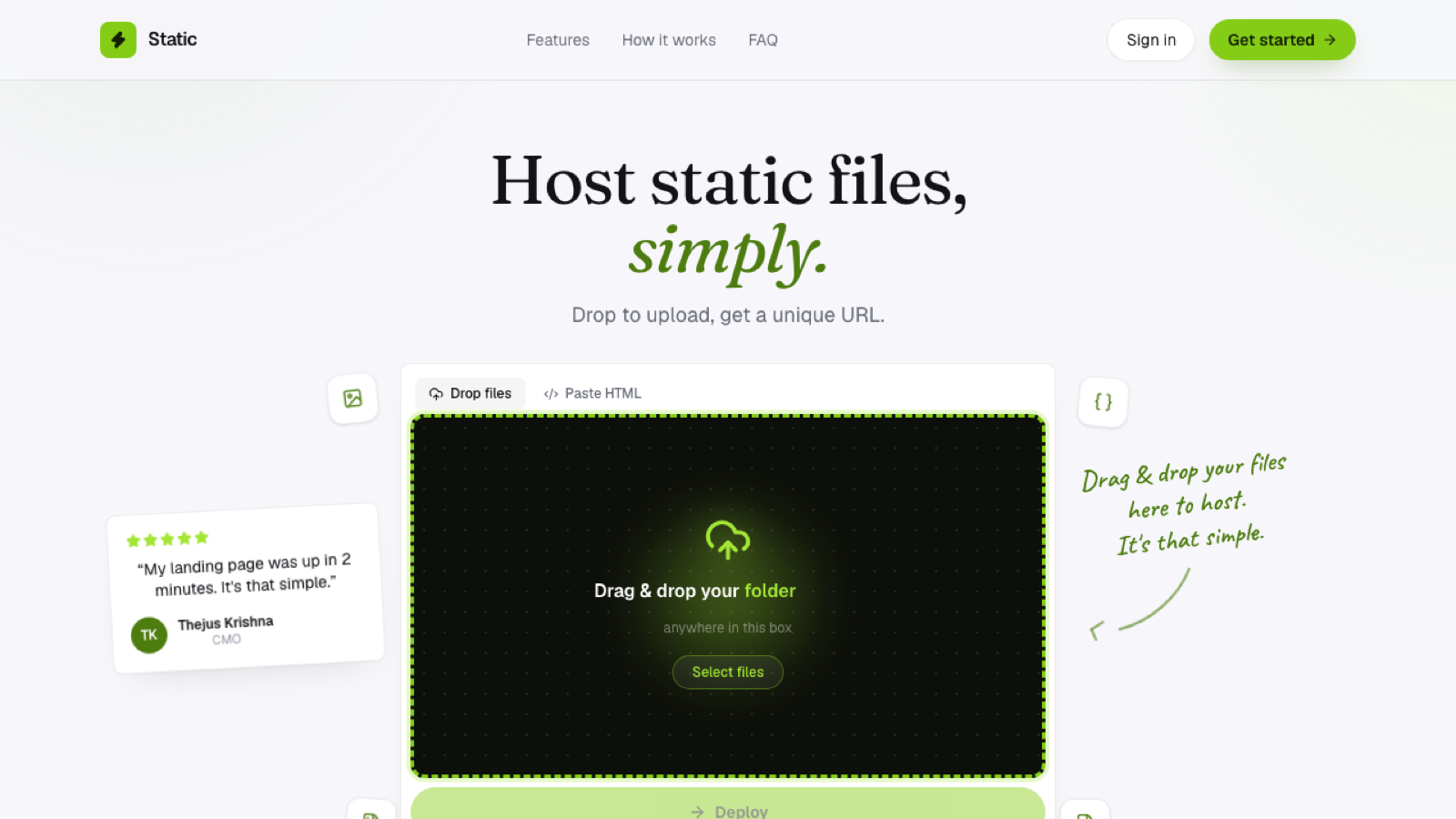
This is a genuinely useful shortcut when you want a real, working, HTTPS-secured web address without going through domain registration, DNS configuration, and a separate hosting setup, all three of which a subdomain from a hosting provider skips entirely in one step.
The tradeoff
A subdomain you're issued isn't one you own outright; you can't transfer it, and it exists at the discretion of whoever controls the parent domain. For a project that's still finding its feet, that's rarely a real limitation in practice; you can always move to a custom domain later once it's worth the investment of time and money.
Frequently asked questions
Can two different people get the same subdomain name? No, subdomain names under a given host are unique, similar to usernames; whoever claims a name first keeps it, and everyone else needs a variation.
Do subdomains cost anything? Ones issued as part of a hosting product are typically free, since they don't require registering a new domain; only the actual domain registration (if you buy your own) carries a recurring cost.
Can I have multiple subdomains for the same project? Yes, in setups that support project variants, each version (staging, a preview, production) can have its own subdomain under the same overall project.