
How to get a free subdomain for your website
You don't need to buy a domain to get a live web address. Here's how to get a free subdomain for a static site in under a minute.
Updated 2026-08-30
A subdomain is the part before a domain name: the blog in blog.example.com, or the yourname in yourname.example.com. You don't need to own a domain yourself to get one. Hosts that offer free subdomains let you claim a name under their domain instead, at no cost and with no registration process.
Why a free subdomain is enough, at least for now
If you're not ready to buy a custom domain, or don't need one yet, a subdomain gets you a real, working, HTTPS-secured link with none of the setup a custom domain requires: no domain purchase, no DNS records to configure, no propagation delay to wait out. It's the fastest way to have something live that isn't a random generated URL you'll forget by tomorrow.
This is the right call for previews, prototypes, portfolios, hackathon projects, and anything where "it's live and I can share the link" matters more right now than owning the exact domain name.
Getting one, step by step
Start with your site ready as files: a folder or .zip with an index.html at the root. Then pick a host that issues subdomains automatically on upload. Drag-and-drop static hosts typically do this without a separate request step.
On Flaash, creating a project suggests a clean subdomain based on the name you give it:
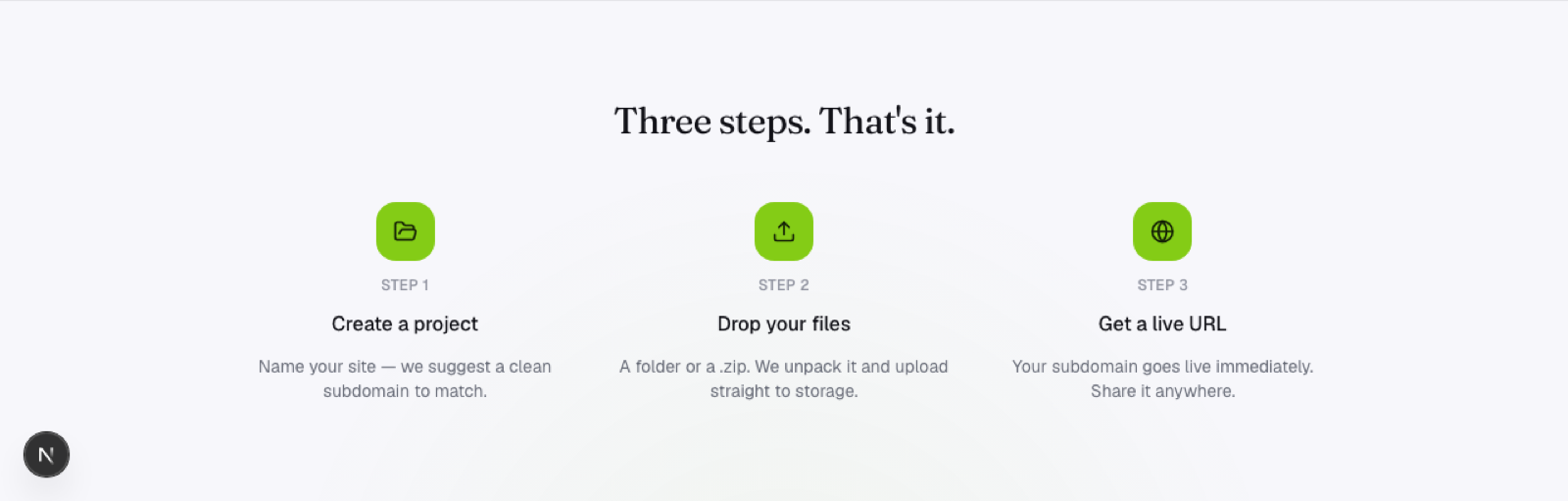
Deploy, and the subdomain becomes active immediately, with HTTPS on by default. There's no certificate to request separately.
What a free subdomain won't do
You don't own it the way you'd own a purchased domain, and you can't transfer it or point it elsewhere; it belongs to the host's namespace, not yours. If your project later needs a custom domain, for branding, SEO, or just because yoursite.com matters more than yoursite.example.com, that's a separate step you take once the project has grown enough to justify it.
Moving from a subdomain to a custom domain later
Most teams start on a subdomain precisely because it removes that decision from the critical path. You can validate the site, share it, and gather feedback before spending any time or money on a domain name at all. There's no cost to starting free and upgrading later, once you actually know the project's worth the investment.
Frequently asked questions
Can I choose exactly what my subdomain says? Usually yes, within the host's naming rules (lowercase letters, numbers, hyphens, and a minimum length are common). If the name you want is taken, most hosts prompt you to pick a variation.
Does a subdomain hurt my site's SEO compared to a custom domain? Not meaningfully at the stage where a subdomain makes sense. Search engines index subdomains normally; the bigger SEO factors are content quality and whether people actually link to and visit the site.
Can I have more than one subdomain for the same project? With a project/variant structure, yes, each variant (staging, a preview, a launch version) can have its own subdomain under the same project.