
Host an ad landing page for PPC campaigns
Paid ad campaigns need dedicated landing pages, often several variants at once. Here's how to host them without slowing down a campaign launch.
Updated 2026-08-30
Running paid traffic to your homepage instead of a dedicated landing page is a common mistake, and it's a costly one. Dedicated pages convert better because the message matches the ad exactly, with none of the distraction a general homepage brings along with it. But building a new landing page for every campaign only helps if hosting it is just as fast as building it was.
What ad landing pages need from hosting
Speed to launch matters most; campaigns often have hard start dates, and hosting can't be the thing holding up go-live when the ad spend is already scheduled. You also need multiple simultaneous versions, since you're frequently testing more than one headline, layout, or offer against the same traffic source at once.
A clean, trustworthy URL matters too. Traffic from a paid ad is unforgiving; a broken link or an untrustworthy-looking domain increases bounce before the page even finishes loading. And fast page loads directly affect your bottom line, since paid traffic is expensive and a slow-loading static page costs you conversions you already paid for.
The workflow
Build the landing page as static HTML/CSS/JS, with tracking (conversion pixels, analytics snippets) embedded as you normally would; these work the same regardless of host.
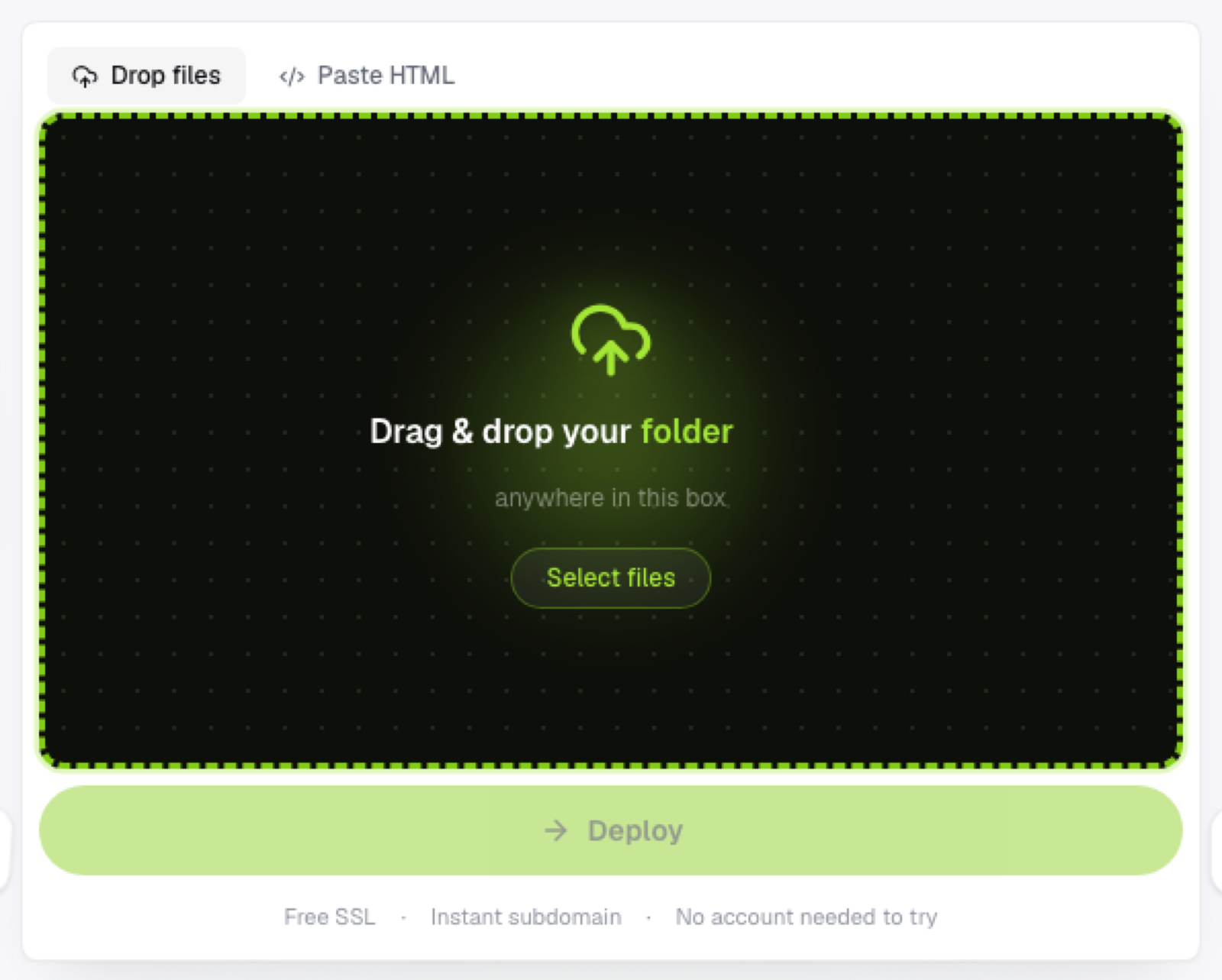
Deploy each variant of the page as a separate version rather than overwriting one link. This lets you run true A/B tests with distinct URLs, or keep a previous version ready to roll back to if a new one underperforms once traffic starts hitting it. Drop the folder in and get your link immediately, no build pipeline standing between "page is ready" and "traffic can hit it." Then point your ad platform at the live URL and launch.
Why static hosting specifically fits ad landing pages
Ad landing pages are almost always static by design: a form, some copy, a CTA, minimal interactivity beyond a tracking script. There's no reason to run this through a full application server. A static host also tends to load faster by default, since there's no server-side processing happening on each request, which matters directly for paid traffic conversion rates, not just as a nice-to-have.
Iterating mid-campaign
If a variant isn't performing, redeploy an updated version to the same link rather than starting a new campaign URL from scratch. This keeps your ad platform's tracking and historical data attached to the same destination while the page underneath actually improves.
Frequently asked questions
How quickly can I launch a new landing page variant mid-campaign? With no build step, typically under a minute from finished files to a live, HTTPS-served URL ready to receive traffic.
Should each ad variant have its own URL, or should they share one? Separate URLs per variant make A/B testing and rollback far simpler, since you can point traffic at exactly the version you want without touching the others.
Do I need to worry about page speed on a static landing page? Less than on a database-backed page, since there's no server-side computation slowing down each request, but large unoptimized images and scripts can still hurt load time regardless of hosting.