
Host a wedding or event website
Wedding and event websites are simple, temporary, and static by nature. Here's how to get one live without paying for hosting you'll only need for a few months.
Updated 2026-08-30
Wedding and event websites share a specific pattern: they're live for a defined window, a few months, maybe a year, they're static (details, a schedule, RSVP, photos), and once the event's over, they're either archived or taken down entirely. That's not a project that needs an ongoing hosting subscription following it around afterward.
What these sites typically need
A memorable link, for invitations, save-the-dates, and text messages, ideally something that's the couple's names or the event itself, not a random string nobody can retype from memory. An RSVP mechanism, usually a form that posts to a spreadsheet or a form service, not custom backend code you'd have to build. Photos and a schedule, static content that doesn't change often once it's set, and reliability for the exact window it matters most: right around the event date, this is the page guests are actually checking, sometimes minutes before they need directions.
None of that requires paid hosting, and building one is often done with a wedding site builder, or hand-coded HTML if you want full control over the design instead.
Getting it live
Build or export the site as static files, a template from a site builder, or hand-written HTML/CSS if you're doing it yourself. Wire up the RSVP form to whichever service is collecting responses; this works independently of where the page itself ends up hosted.
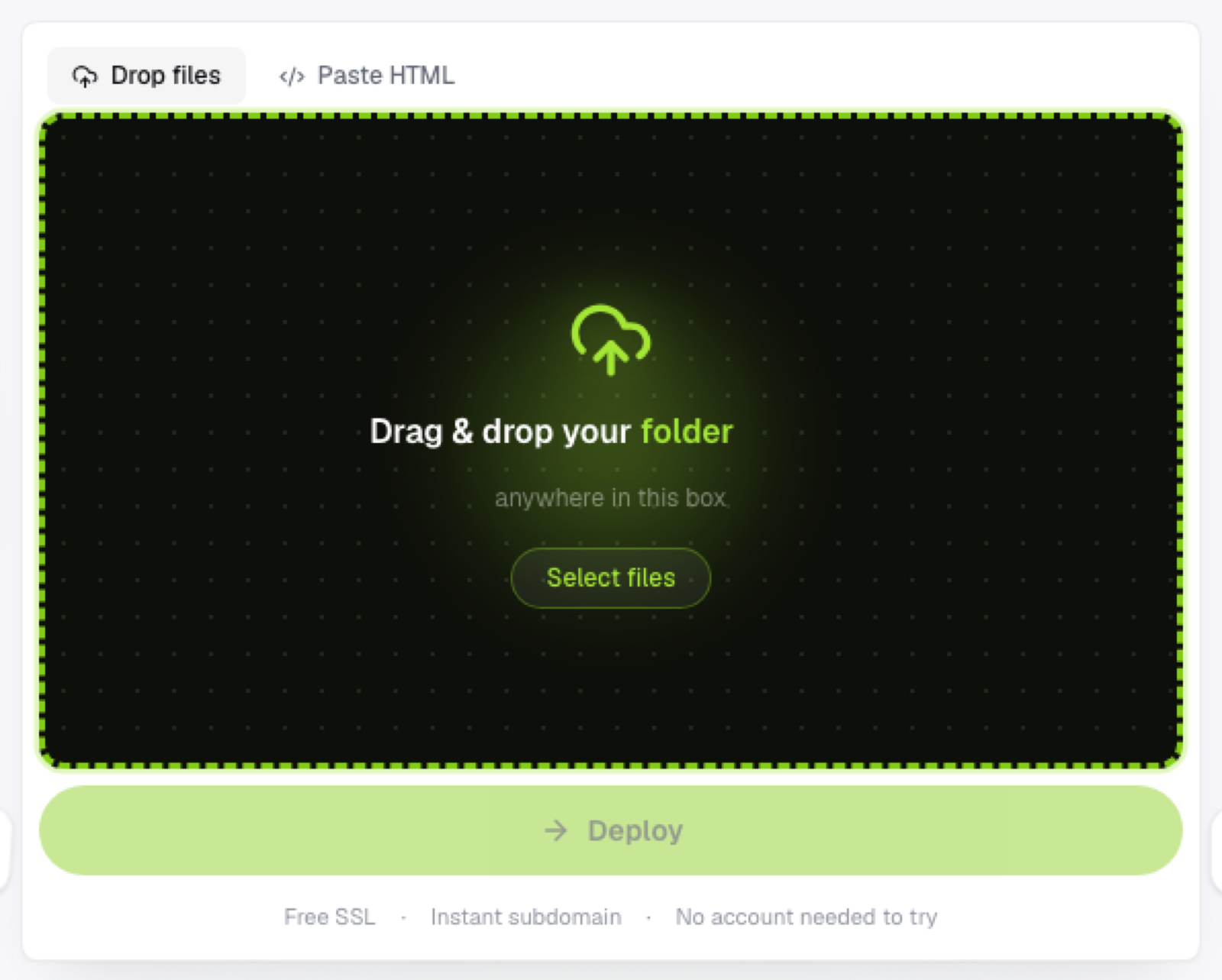
Drop the folder onto a browser-based static host and get an HTTPS link immediately. Use a subdomain that reads clearly, names, or a short phrase tied to the event, since this is going on printed invitations and texts, not just a bookmark saved in someone's browser.
After the event
Once the event has passed, the site doesn't need to keep running as a subscription you forget you're paying for. It can simply stay as-is if you want it archived as a keepsake, or be replaced entirely. Either way, there's no ongoing hosting bill to remember to cancel, because there wasn't one to begin with.
Frequently asked questions
Should the wedding site go live months before the event? Many couples publish it as soon as the RSVP details and schedule are finalized, giving guests plenty of time to check details and respond ahead of the date.
Can I password-protect a wedding website? Not through static hosting alone, since that would require server-side logic the page doesn't have. A less-discoverable subdomain is a reasonable middle ground for most couples who just don't want it publicly indexed.
What happens to RSVP data after the event? That depends entirely on whichever form or spreadsheet service you connected the RSVP form to; the static site itself doesn't store any of that data.